Congress Accuses Government of Using Women’s Quota to Reshape Electoral Boundaries
Opposition claims proposed reforms mask political strategy ahead of future elections
In a sharp political confrontation, Congress leaders have accused the ruling government of using the women’s reservation policy as a cover to push through changes in electoral boundaries. Speaking in New Delhi, senior party figures argued that the move is effectively a strategy for electoral redrawing (निर्वाचन पुनर्सीमांकन) [nirvachan punarseemankan] under the guise of women’s representation policy (महिला प्रतिनिधित्व नीति) [mahila pratinidhitva neeti], aimed at consolidating political advantage ahead of upcoming elections.
Congress leaders Gaurav Gogoi and K C Venugopal alleged that the government is “bulldozing” changes to the political map to strengthen its position for the 2029 elections. They challenged the administration to implement the women’s quota immediately within the current Lok Sabha structure of 543 seats, without linking it to future exercises such as census updates or delimitation. This demand highlights concerns over legislative implementation delay (विधायी कार्यान्वयन में देरी) [vidhayi karyanvayan mein deri] and the perceived manipulation of parliamentary seat expansion (संसदीय सीट विस्तार) [sansadiya seat vistar].
Venugopal sharply criticized the government’s intentions, stating, “You are using women’s quota to destroy democracy... Your intention is whatever happens to the nation, we have to win the election.” He also took aim at the Prime Minister’s response to protests by Members of Parliament from Tamil Nadu and Kerala, claiming that the remarks showed a lack of understanding of regional sentiments. These statements reflect rising tensions over democratic accountability (लोकतांत्रिक जवाबदेही) [loktantrik jawabdehi] and political rhetoric (राजनीतिक बयानबाज़ी) [rajnaitik bayanbaazi].
Gogoi further compared the government’s approach to practices seen in the United States, describing it as a form of “gerrymandering,” where electoral districts are redrawn for political exploitation (राजनीतिक शोषण) [rajnaitik shoshan]. He alleged that previous exercises in regions like Jammu and Kashmir and Assam involved selective use of census data and administrative tools to reshape constituencies. According to him, this raises serious questions about boundary manipulation (सीमा हेरफेर) [seema herafer] and the integrity of electoral fairness (निर्वाचन निष्पक्षता) [nirvachan nishpakshata].
The Congress leader argued that key principles such as geographical continuity and uniform constituency size were overlooked in these processes. He warned that what was implemented in specific states might now be extended nationwide. “What was done in Assam and J&K, govt wants to do it in the entire country. How shameful and sad. This is how you are misusing women in the name of quota,” he remarked, emphasizing concerns over institutional misuse (संस्थागत दुरुपयोग) [sansthagat durupyog] and policy justification tactics (नीति औचित्य रणनीति) [neeti auchitya rananeeti].
The debate also touched on the history of the women’s reservation law. Gogoi pointed out that the Nari Vandan Adhiniyam was passed in 2023 with unanimous support, rejecting claims that the current government was introducing the concept for the first time. He argued that the administration had deliberately linked the quota’s implementation to the 2027 census and delimitation process, rather than applying it in the 2024 elections as previously demanded by opposition leaders. This situation underscores issues related to policy timing strategy (नीति समय निर्धारण रणनीति) [neeti samay nirdharan rananeeti] and legislative prioritization (विधायी प्राथमिकता) [vidhayi prathamikta].
The controversy continues to intensify as both sides present sharply contrasting interpretations of the proposed reforms. While the government frames the initiative as a step toward improving representation, critics argue that it risks undermining democratic processes. The broader debate highlights ongoing tensions surrounding electoral system reforms (निर्वाचन प्रणाली सुधार) [nirvachan pranali sudhar] and the balance between representation and political advantage (प्रतिनिधित्व और राजनीतिक लाभ) [pratinidhitva aur rajnaitik laabh].
Key Hindi Vocabulary
निर्वाचन पुनर्सीमांकन [nirvachan punarseemankan] electoral redrawing
महिला प्रतिनिधित्व नीति [mahila pratinidhitva neeti] women’s representation policy
विधायी कार्यान्वयन में देरी [vidhayi karyanvayan mein deri] legislative implementation delay
संसदीय सीट विस्तार [sansadiya seat vistar] parliamentary seat expansion
लोकतांत्रिक जवाबदेही [loktantrik jawabdehi] democratic accountability
राजनीतिक बयानबाज़ी [rajnaitik bayanbaazi] political rhetoric
राजनीतिक शोषण [rajnaitik shoshan] political exploitation
सीमा हेरफेर [seema herafer] boundary manipulation
निर्वाचन निष्पक्षता [nirvachan nishpakshata] electoral fairness
संस्थागत दुरुपयोग [sansthagat durupyog] institutional misuse
नीति औचित्य रणनीति [neeti auchitya rananeeti] policy justification tactics
नीति समय निर्धारण रणनीति [neeti samay nirdharan rananeeti] policy timing strategy
विधायी प्राथमिकता [vidhayi prathamikta] legislative prioritization
निर्वाचन प्रणाली सुधार [nirvachan pranali sudhar] electoral system reforms
प्रतिनिधित्व और राजनीतिक लाभ [pratinidhitva aur rajnaitik laabh] representation and political advantage
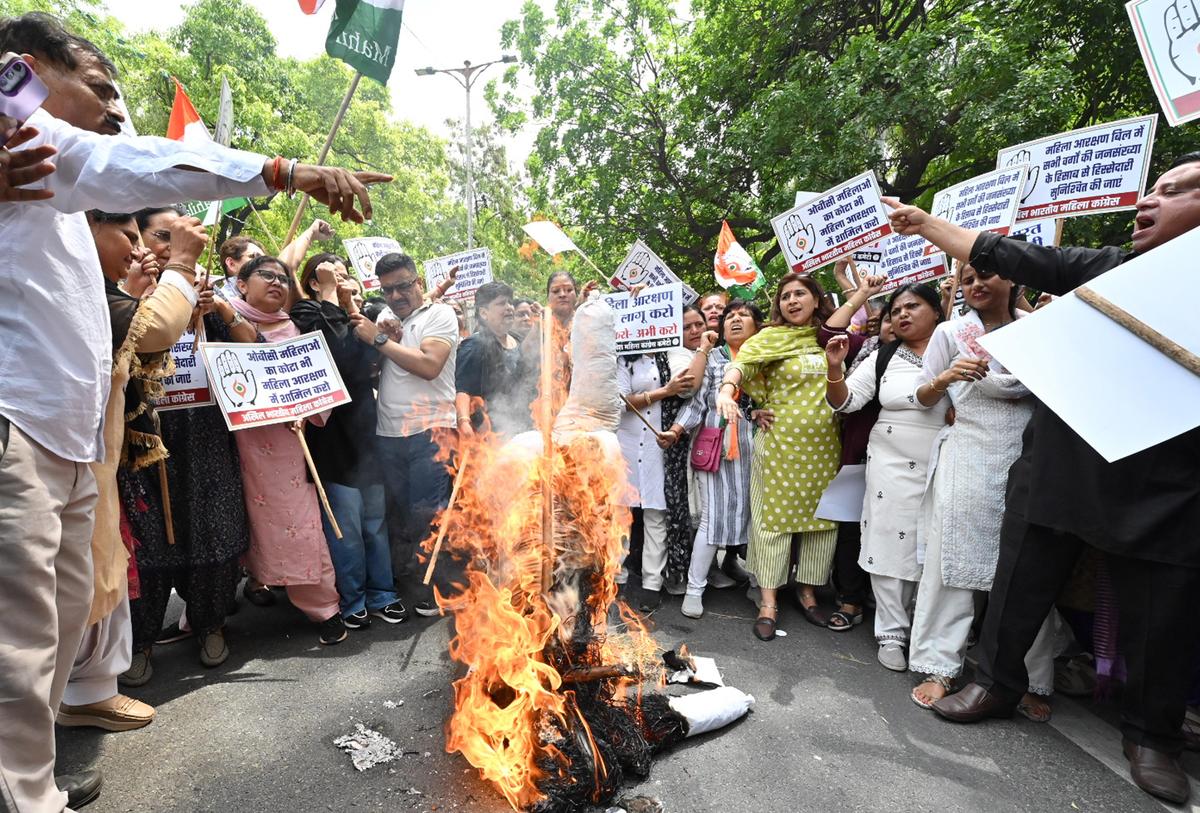
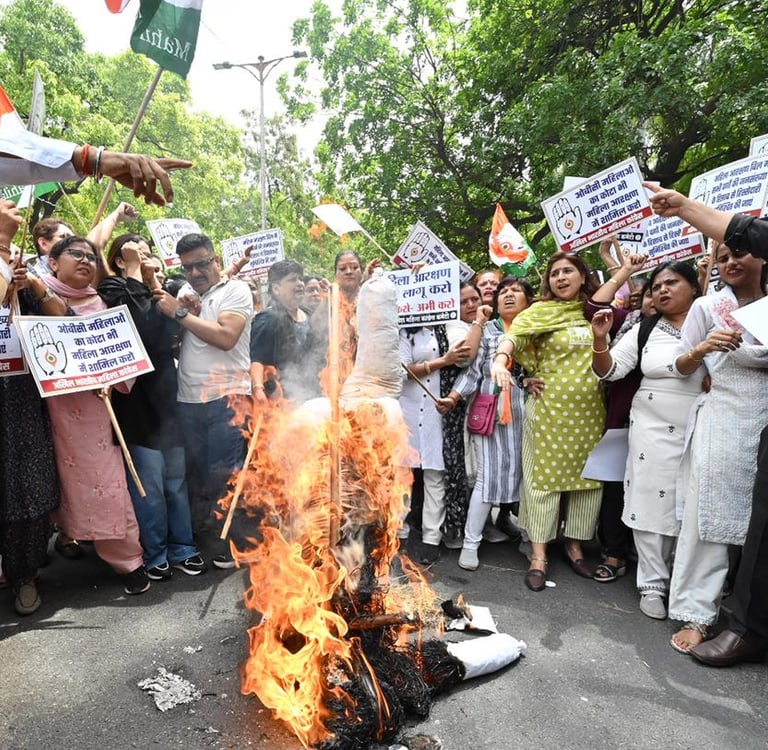
Congress hits streets over women's quota.
For requests or suggestions: pr@indian-institute.com


Learn the official language of India in 30 days thanks to the most complete Grammar, Vocabulary and Culture courses available.
Start speaking Hindi today!
© Copyright 2026 Indian Institute
Come visit India!