Indian politicians are campaigning while holding fish. What is going on?
In West Bengal’s campaign, fish emerges as a powerful symbol of identity, culture, and political messaging
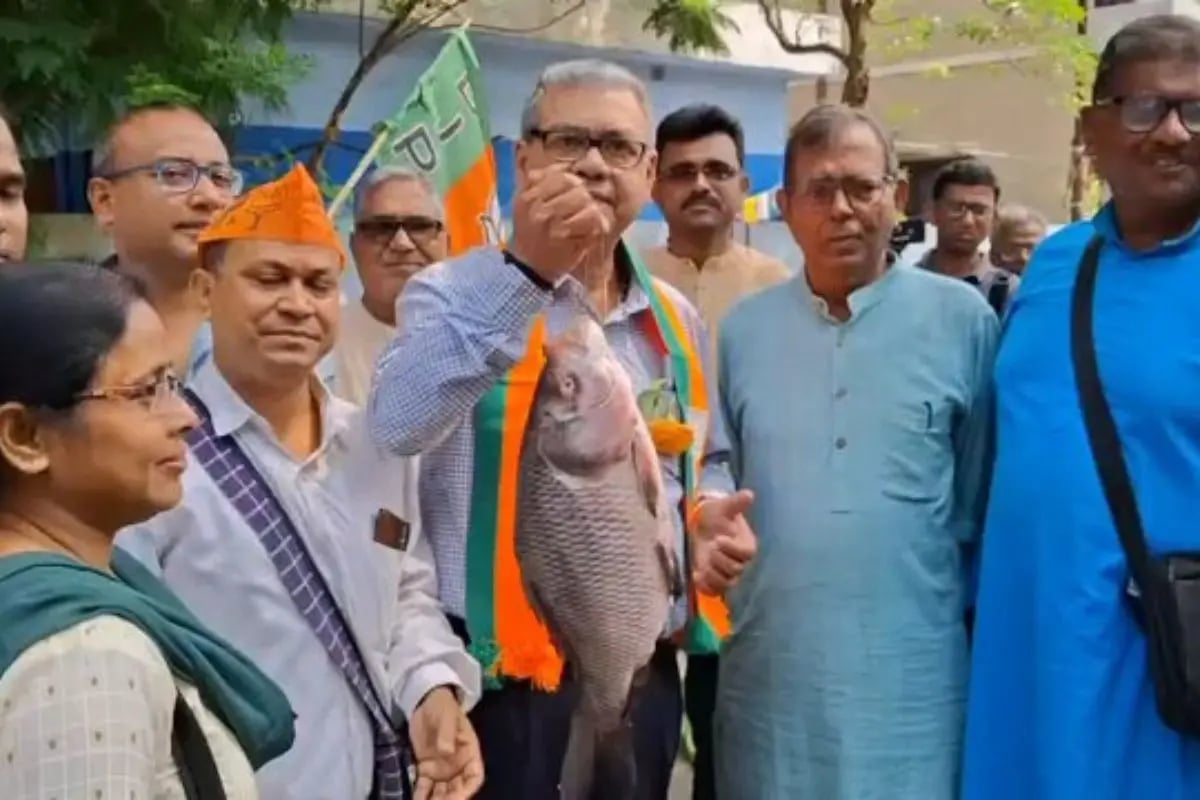
On a humid morning in Kolkata, a candidate moves from door to door dressed in traditional attire, holding a fish as a campaign prop (चुनावी प्रतीक) [chunaavi prateek]. Drums echo behind him while supporters chant his name, creating a vivid scene of grassroots campaigning (जमीनी प्रचार) [zameeni prachaar]. A lawyer-turned-politician representing the Bharatiya Janata Party (BJP) in the Barrackpore constituency, he relies not on speeches but on a visual message of belonging. The gesture communicates a simple idea: he shares the same cultural identity (सांस्कृतिक पहचान) [saanskritik pahchaan] as the voters.
Elsewhere in Kolkata’s port area, another BJP candidate repeats the same act, raising a fish in crowded streets as part of a carefully staged political spectacle (राजनीतिक प्रदर्शन) [raajneetik pradarshan]. These scenes are not random but part of a broader attempt to connect with voters through everyday symbols. In West Bengal, fish is not merely food but an essential part of regional culture (क्षेत्रीय संस्कृति) [kshetriya sanskriti], deeply embedded in daily life, rituals, and memory.
Across the state, fish has become central to the election campaign, reflecting a deeper identity politics (पहचान की राजनीति) [pahchaan ki raajneeti]. Political parties are using it to address anxieties linked to food habits, which in India often carry ideological and cultural significance. The BJP, led nationally by Prime Minister Narendra Modi, is sometimes associated with a more assertive vegetarian outlook, shaped by policies and perceptions in certain states. This has contributed to a narrative that food choices may be influenced by politics.
In response, West Bengal’s Chief Minister Mamata Banerjee has strongly defended local traditions, making food a core part of her campaign messaging. "The BJP will not allow you to eat fish. Nor will they allow you to eat meat or eggs," she told a campaign meeting. In another address, she said, "Bengal lives on fish and rice. You are telling Bengal people you can't have fish, you cannot have meat, you cannot have eggs - what will they eat then?" Her remarks highlight how cultural preservation (सांस्कृतिक संरक्षण) [saanskritik sanrakshan] is being framed as a political issue.
The BJP has rejected these claims, pushing back with equal force. Party leader Smriti Irani called the accusation "a lie", asserting that "Bengal and fish and rice are a part of its culture which will never end". Another candidate dismissed the allegations as a distraction, stating: "They are trying to divert public attention from their corruption with this false narrative that we will prohibit fish consumption. This is rubbish." These exchanges reveal how food has become part of political rhetoric (राजनीतिक बयानबाजी) [raajneetik bayaanbaazi], used by both sides to shape voter perception.
Prime Minister Modi has also engaged with the issue, but from a different angle, turning it into a critique of governance. He argued that the state government had failed to ensure local fish production, saying, "Even after 15 years in power, the Trinamool Congress has failed to provide you with even something as basic as fish. Even fish has to be sourced from outside the state." This reframes fish as an issue of economic performance (आर्थिक प्रदर्शन) [aarthik pradarshan] rather than just culture.
Banerjee responded swiftly, countering the claim and criticising BJP-led states, saying, "You [BJP] do not allow fish consumption in Bihar, Uttar Pradesh and Rajasthan, states that you govern, and organise attacks on fish shops in Delhi. Aren't you ashamed?" The debate illustrates how food can become a site of political confrontation (राजनीतिक टकराव) [raajneetik takraav], reflecting broader ideological divides.
Beyond politics, fish holds deep meaning in Bengal’s social fabric. It represents geography, shaped by river systems like the Ganges and Padma, as well as history, including the legacy of Partition. It also signals class distinctions and culinary knowledge. This layered significance contributes to its role as a powerful cultural symbol (सांस्कृतिक प्रतीक) [saanskritik prateek], capable of carrying multiple meanings simultaneously.
Statistics reinforce its importance. India is one of the world’s largest fish producers, yet consumption varies widely across regions. In West Bengal, however, fish consumption is nearly universal, with around 65.7% of people eating it weekly. This makes fish not just a dietary staple but a defining feature of daily life practices (दैनिक जीवन प्रथाएं) [dainik jeevan prathaen] in the region.
Literature and popular culture further deepen this connection. Bengali writers have long used fish as a metaphor for survival, identity, and ecology. The prized hilsa fish, often considered the crown jewel of Bengali cuisine, is associated with belonging and culinary expertise. These cultural associations explain why fish has become such an effective tool in electoral messaging (चुनावी संदेश) [chunaavi sandesh].
Sociologists suggest that the dense symbolism attached to fish makes it ideal for political use. Parties are not just referencing it but incorporating it into campaign choreography to engage voters emotionally. In a contest shaped by identity, livelihoods, and cultural pride, fish has emerged as a shorthand for what is at stake.
In the end, fish may not determine the election outcome, but it has already framed the narrative. It demonstrates how seamlessly culture and politics (संस्कृति और राजनीति) [sanskriti aur raajneeti] intersect in India, especially during elections where symbols often speak louder than policies.
Key Hindi Vocabulary
चुनावी प्रतीक [chunaavi prateek] campaign prop
जमीनी प्रचार [zameeni prachaar] grassroots campaigning
सांस्कृतिक पहचान [saanskritik pahchaan] cultural identity
राजनीतिक प्रदर्शन [raajneetik pradarshan] political spectacle
क्षेत्रीय संस्कृति [kshetriya sanskriti] regional culture
पहचान की राजनीति [pahchaan ki raajneeti] identity politics
सांस्कृतिक संरक्षण [saanskritik sanrakshan] cultural preservation
राजनीतिक बयानबाजी [raajneetik bayaanbaazi] political rhetoric
आर्थिक प्रदर्शन [aarthik pradarshan] economic performance
राजनीतिक टकराव [raajneetik takraav] political confrontation
सांस्कृतिक प्रतीक [saanskritik prateek] cultural symbol
दैनिक जीवन प्रथाएं [dainik jeevan prathaen] daily life practices
चुनावी संदेश [chunaavi sandesh] electoral messaging
संस्कृति और राजनीति [sanskriti aur raajneeti] culture and politics
Vote for me, I come with fish', BJP leader's seafood swipe at TMC goes viral.
For requests or suggestions: pr@indian-institute.com


Learn the official language of India in 30 days thanks to the most complete Grammar, Vocabulary and Culture courses available.
Start speaking Hindi today!
© Copyright 2026 Indian Institute
Come visit India!