
India’s state elections see AI moving from the margins to the mainstream
Artificial intelligence transforms campaign strategies, but its real impact on voters remains uncertain
In April, several Indian states, including Tamil Nadu, Kerala, West Bengal, Assam and the Union Territory of Puducherry, are holding legislative assembly elections that will determine their next governments. Alongside the political contest, these elections mark a turning point in the use of artificial intelligence in campaigns (चुनावों में कृत्रिम बुद्धिमत्ता) [chunaavon mein krtrim buddhimatta], with experts noting that AI has shifted from a peripheral experiment to a central tool in modern political strategy.
“Artificial intelligence has moved from the margins to the mainstream of political campaigning in India’s 2026 (state) assembly elections,” Prachir Singh, a senior research analyst, told CNA. “Compared to the 2024 Lok Sabha elections, which was largely an AI pilot phase, 2026 marks a step change in scale and sophistication,” he added. This transition reflects the rapid growth of digital campaign infrastructure (डिजिटल अभियान ढांचा) [digital abhiyan dhaancha], including dedicated war rooms that monitor voter sentiment and coordinate messaging in real time.
This transformation is especially visible in Tamil Nadu, where AI-driven operations are now considered as important as traditional campaigning. Political parties are using AI to create content, amplify speeches and shape messaging strategies. These systems function alongside grassroots mobilisation (जमीनी संगठन) [zameeni sangathan], rather than replacing it, indicating a hybrid model of campaigning that blends technology with on-the-ground outreach.
Experts note that AI tools are now used to generate videos, clone voices, create avatars and translate speeches into regional languages, enabling broader multilingual outreach (बहुभाषी पहुंच) [bahubhaashi pahunch]. Compared to earlier elections, it has also become harder to distinguish between authentic and AI-generated material, raising concerns about transparency and trust in political communication.
One of the most significant developments is the rise of micro-targeting strategies (सूक्ष्म लक्ष्यीकरण रणनीतियाँ) [sookshm lakshyikaran rananeetiyan], where AI analyses voter data to deliver tailored messages. By examining voter rolls, demographic data and social media behaviour, campaigns can identify individuals who may be open to persuasion and send them customised content. While AI cannot guarantee accurate predictions, it enhances the efficiency of targeting and messaging.
This shift represents a move from the experimental use of AI in 2024 to what experts describe as a full-fledged campaign automation system (अभियान स्वचालन प्रणाली) [abhiyan swachalan pranali] in 2026. AI is no longer limited to central party offices but is increasingly used by local campaign managers and smaller teams, making it more accessible across different levels of political organisation.
The Election Commission of India has also adopted AI technologies, deploying AI-powered surveillance systems (एआई आधारित निगरानी प्रणाली) [AI aadharit nigraani pranali] to monitor crowd levels and manage queues at polling booths. It has also used AI-generated videos for voter awareness campaigns. However, its use of AI in voter-roll verification has sparked controversy, with reports of millions of names being removed due to data mismatches.
The Supreme Court questioned the reliance on AI to flag “logical discrepancies”, noting that such systems may not fully reflect ground realities. This highlights concerns about algorithmic decision-making (एल्गोरिदमिक निर्णय प्रक्रिया) [algorithmic nirnay prakriya], especially when it affects democratic participation and voter rights.
Different states are using AI in distinct ways. Tamil Nadu stands out for its organised and widespread use, with political parties producing large volumes of AI-generated content. In contrast, Kerala and Puducherry have used AI more playfully, incorporating avatars, satire and even robots at polling booths to engage voters.
In Assam and West Bengal, however, AI has intersected with sensitive issues such as religion and identity. Reports have identified AI-generated videos containing divisive messaging, raising concerns about misinformation amplification (भ्रामक सूचना विस्तार) [bhraamak soochna vistaar]. Experts warn that in regions with existing social tensions, AI can intensify divisions and spread narratives more rapidly.
Another major concern is the rise of AI-manipulated audio and video, often referred to as deepfakes. These forms of synthetic media content (सिंथेटिक मीडिया सामग्री) [synthetic media saamagri] are difficult to detect and can spread quickly through platforms like WhatsApp, making real-time verification challenging. Such content has already been used in past elections, sometimes appearing just before voting, when fact-checking becomes difficult.
Despite these developments, experts remain divided on whether AI actually influences voter behaviour. Some argue that personalised messaging can shape opinions, especially as more people consume political content on their smartphones. Others believe that digital campaigns mainly reinforce existing views rather than changing them, describing social media as an echo chamber.
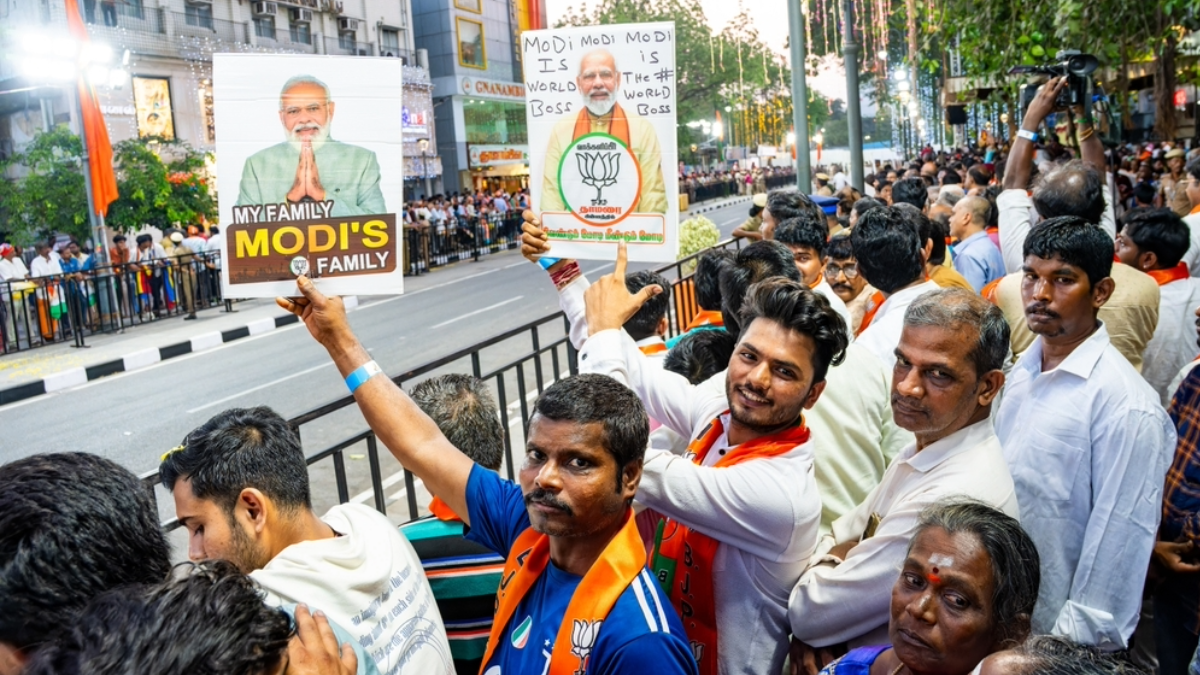
Traditional campaigning, including rallies and direct voter interaction, continues to play a central role. Analysts suggest that while AI enhances efficiency and reach, it does not replace the importance of on-ground political engagement (मैदान स्तर राजनीतिक संपर्क) [maidan star raajneetik sampark]. The true impact of AI on voter decisions remains uncertain and difficult to measure.
Looking ahead, experts agree that AI will become even more integral to election campaigns. Political parties are likely to increase investment in these technologies due to their ability to automate tasks and expand outreach. At the same time, challenges related to regulation, enforcement and digital literacy will need to be addressed to ensure fair and transparent elections.
Authorities have introduced measures such as disclosure requirements for AI-generated content, but enforcement remains inconsistent. The growing gap between technological capabilities and regulatory frameworks raises concerns about the long-term effects on democratic processes.
Ultimately, AI is reshaping the mechanics of campaigning, making it faster, more targeted and more complex. However, its influence on voter behaviour and democratic outcomes remains an open question, highlighting the need for continued scrutiny and adaptation in an evolving political landscape.
Key Hindi Vocabulary
चुनावों में कृत्रिम बुद्धिमत्ता [chunaavon mein krtrim buddhimatta] artificial intelligence in campaigns
डिजिटल अभियान ढांचा [digital abhiyan dhaancha] digital campaign infrastructure
जमीनी संगठन [zameeni sangathan] grassroots mobilisation
बहुभाषी पहुंच [bahubhaashi pahunch] multilingual outreach
सूक्ष्म लक्ष्यीकरण रणनीतियाँ [sookshm lakshyikaran rananeetiyan] micro-targeting strategies
अभियान स्वचालन प्रणाली [abhiyan swachalan pranali] campaign automation system
एआई आधारित निगरानी प्रणाली [AI aadharit nigraani pranali] AI-powered surveillance systems
एल्गोरिदमिक निर्णय प्रक्रिया [algorithmic nirnay prakriya] algorithmic decision-making
भ्रामक सूचना विस्तार [bhraamak soochna vistaar] misinformation amplification
सिंथेटिक मीडिया सामग्री [synthetic media saamagri] synthetic media content
मैदान स्तर राजनीतिक संपर्क [maidan star raajneetik sampark] on-ground political engagement
The Era of AI-Generated Election Campaigning is Underway in India.
For requests or suggestions: pr@indian-institute.com


Learn the official language of India in 30 days thanks to the most complete Grammar, Vocabulary and Culture courses available.
Start speaking Hindi today!
© Copyright 2026 Indian Institute
Come visit India!